Is the Music Dying?
Something I hear a lot is that music is dying on Saint Helena. It would be easy to conclude that the individualism of modern connectivity is shifting priorities amongst the youngest generation. But is it really true? To find out, I surveyed 84 students at Saint Helena Secondary School.
Students love music.
It is certainly not the love of music that is dying. Almost all respondents report listening to music at least occasionally, with half claiming to listen “all the time”. Listening seems to be more individual, but friends recommendations remain a key mode of music discovery. The most common mode of music discovery is TikTok. Digitally curated and individualized playlists and algorithms, it would seem, are replacing the locally curated playlists of radio DJs. Local tastes are therefore being replaced by global trends. Only 18 of respondents claimed to discover music via local radio, which didn’t make the top five. However, Luke says that he often gets younger people ask him about songs he broadcasts, indicating that perhaps in the age bracket above school-age, the radio remains important.
How often do you listen to music?
How do you most often discover new music
Deeper meanings in music.
Music, it seems, is a way for people to connect with deeper emotions. Zac mentioned this a few times in his interview—music is like a “deeper” language. Mark’s music contains emotional, motivational, and uplifting themes, and it seems to resonate with his fans according to the comments on social media (I won’t post those here because they are posted on a private account). This may be quite different from previous generations in which music was aimed at fun and togetherness, and could reflect the turning of the public eye inward to the individual.
However, just because people value the deeper emotional side of music doesn’t mean that music is less important socially; students do very much enjoy group karaoke and other collective music making opportunities.
How much does listening to music affect your mood?
Young people sing. Especially together.
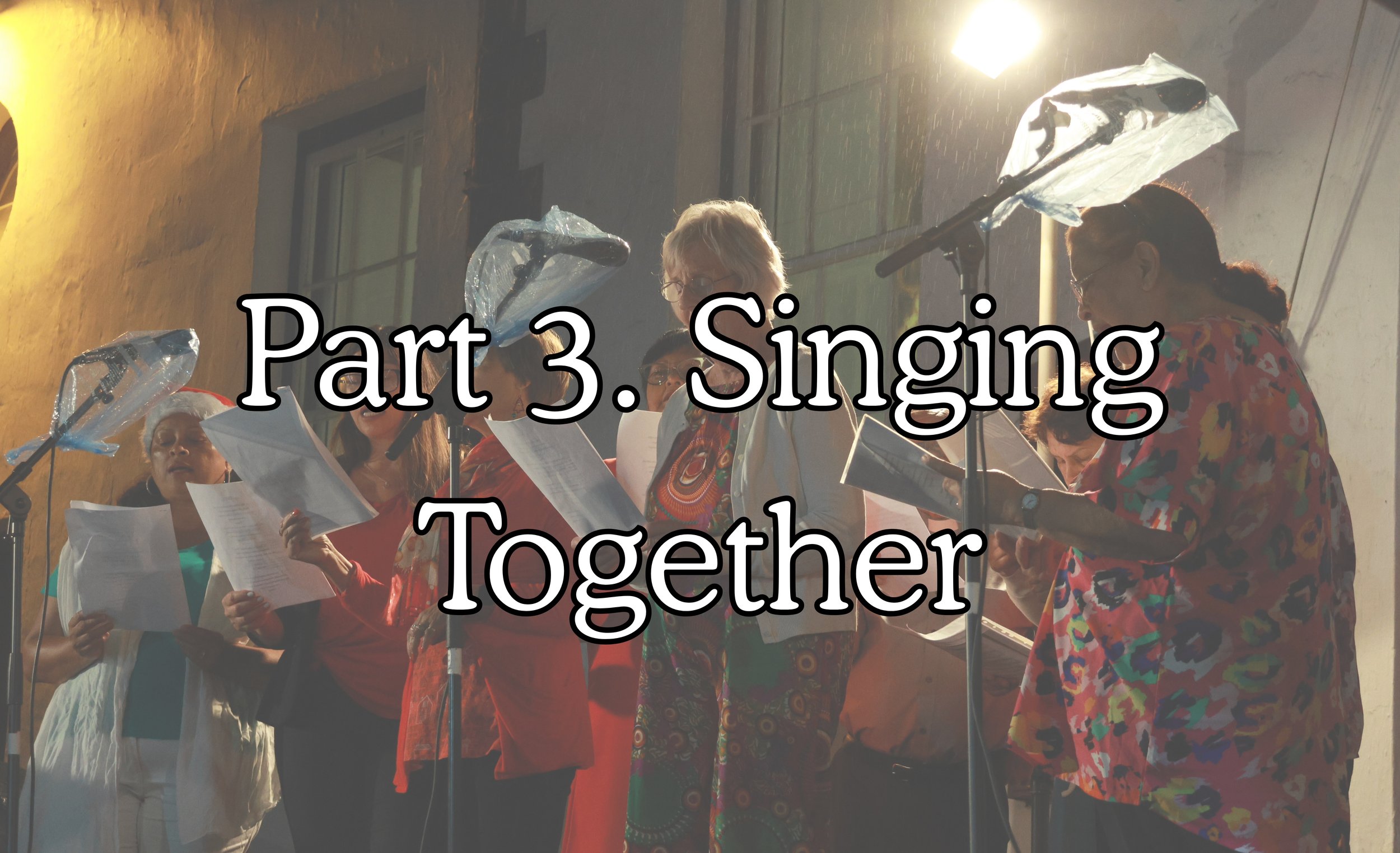
Over half of the respondents claimed to sing in their daily lives at least sometimes. As their teacher, I have noted the enthusiasm for group-singing is clear, but solo-singing markedly less so. In the video of the New Generation band, a student band that formed in the 2020s, you can see the singers sharing the front of the stage. Group singing is acknowledged as a cultural artefact by Saints, evidenced by the group singing that occurred at the opening of Saint Helena’s Day 2026.
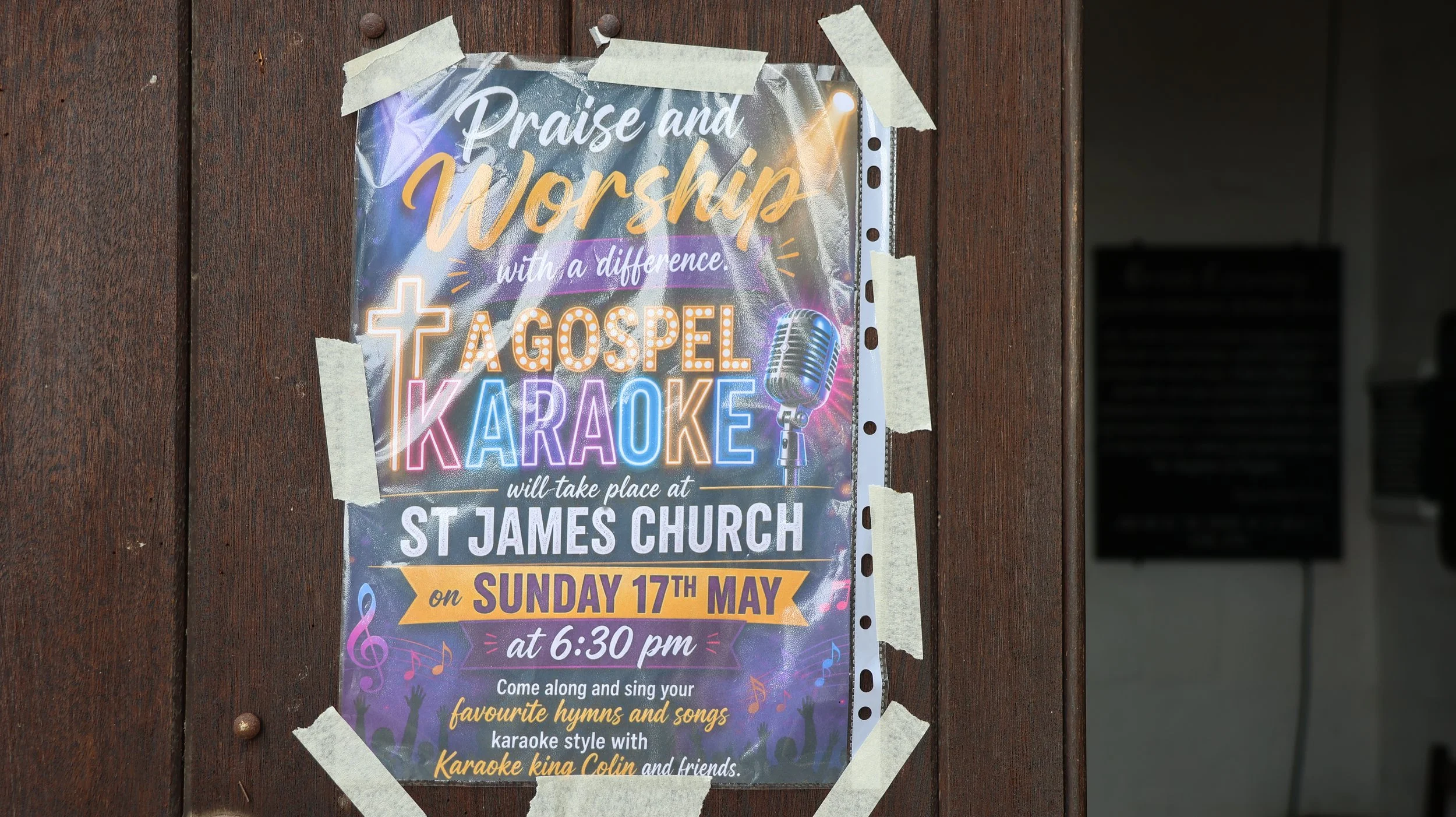
Congregational singing may play a role in the willingness and comfort of people singing as a group, as the majority of Saint Helenians are churchgoers. Vilma says she first felt confident enough to sing in church, but wouldn’t sing in public before that. A praise and worship Karaoke night at the Anglican church in May 2026 is a poignant example of this.
How often do you sing in your daily life?
Self consciousness.
One may think that self-consciousness is a result of modern social media and marketing, but it is not necessarily new.
Vilma explains that she was also reluctant to sing because her voice didn’t match what she heard in records, only gaining confidence later in life. This relates to what I wrote in Part Three: Singing Together—technology may be putting those off of active participation in public music making. Vincent claims that he tried his best to model his voice after Hank Williams back in the day, but has relaxed a lot now. This indicates that there was an internal pressure to sound like what he heard in recordings. Luke thinks he is more self-critical now than he used to be, and that the modern self-consciousness may be creeping into audience behaviour as well.
Many children play instruments.
As well as singing, many children play instruments, almost 75% of respondents. The question asked to indicate yes even if they didn’t think they could play much, indicating that the casual/informal ways of making music are still very much perceived and accepted by the new generation.
Half of them reported to find playing instruments with friends fun, with another large chunk (40%) being neutral to it. The majority of them thought learning an instrument was worthwhile.
Do you think playing an instrument is worthwhile?
Can you play an instrument at all?
Do you think playing instruments with friends is fun?
Diverse tastes
Technology and connectivity has probably altered musical taste. Digital mediation has led to diversification of genres and musical interests. This isn’t necessarily new, as in 2007 Emma-Jane Yon reported that more modern techno styles seemed to be increasingly prevalent. In the past, country music may have once dominated, the school survey respondents cite rap, pop, video game music, and rock as their top four genres, with country appearing further down the list. Younger people’s listening habits are starting to mirror that of the outside world.
What are your favourite genres?
Music isn’t dying, just changing shape.
Whilst many things about Saint Helenian life are indeed changing, the values that shape it - adaptability, community, and a friendly smile - continue to define it.
I believe that is what gives Saint Helenian Music it’s unique identity.
You’ve reached the end of The Story. Why not check out the music itself?