Part Three: Singing Together
We have seen how Saints make music, but why do they?
Simply put, music is a way for Saints to enjoy their close knit community.
Drivers wave as they pass each other on the road. Radio presenters read out song dedications to mothers, uncles, sons, and friends. Socializing is embedded into the rhythm of the island.
Family first
In this environment, families play a big role. It is a fairly usual question to be asked who your family is; your family becomes your identity. It is within these family units that musical inspiration first develops.
Let’s Dance.
In Saint Helena, music has long been something enjoyed collectively with friends, family, and neighbours. Vincent recalls his father gathering with neighbours to play music. This music would sometimes take the form of community dances that would continue late into the night. As Tony describes, some of these dances were formal social occasions where people walked long distances to waltz, foxtrot, and spend time together.
Today, dancing is still very much a cornerstone of social engagement, with the nightclub Donny’s being the destination for many on weekend nights. In 2018 I recorded guitars for a visiting pop duo, KUDOS. The video for “Do What You Want” was filmed in Donny’s. There, you can see that the style and culture has modernised, but at the centre of it all is a shared enjoyment of music and energy.
Dancing is key for musicians
For rock musicians on the island, audience participation—particularly dancing—is an indicator of a successful performance. Performers often seek to create a shared sense of energy between band and audience, which in turn shapes repertoire choices.
Around Christmas, many Saint Helenians return from their overseas employment to spend the holidays with their families. This is a busy time for local musicians, who try to get their audiences on the dance floor having a good time together. The below footage of The Big Easy playing during the 2024 holiday season shows what that looks like in practice.
Getting Together
Vincent describes a style of music-making that felt more common when I first arrived on the island in 2016 than it does now. A local band might perform with an assortment of members, depending on who happens to be there. In this kind of setting, the line between performer and audience becomes blurred. Rather than a fixed performance, it felt more like a large group of people making music together and enjoying each other’s talents. Vincent remembers this atmosphere particularly at gatherings on Francis Plain, where acoustic instruments and communal participation were central.
I recall Saint Helena Day celebrations where this was more prevalent, whereas now, I rarely witness it. It isn’t necessarily that it doesn’t happen though, but music may have become more formalized by equipment and modern performance practices.
Vincent’s band—The Dry Bottle Band—with its changing lineup, illustrate this type of informal get-together music making. In the video Vincent is playing mandolin, his wife Vilma on accordion and guitar, his brother George on harmonica, and his friend Jackie on fiddle.
Mic-shy
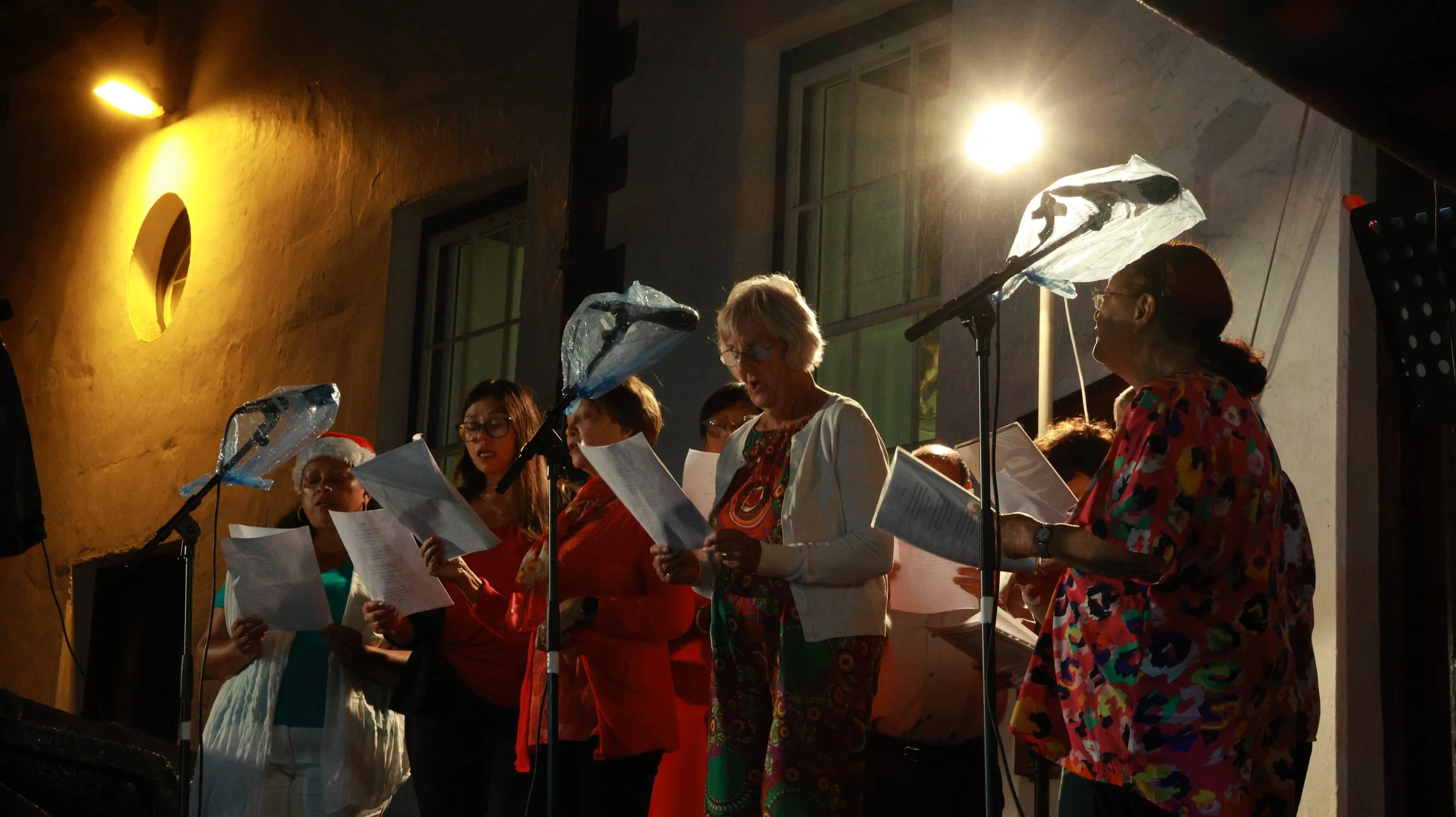
Today, most live performances are amplified, and Vincent wonders whether this may discourage people from simply “having a go”. This brings to light a concern that the use of modern technology might be reducing opportunities for informal casual music making. Vilma herself was afraid of the microphone at first, only getting used to it later. I have myself witnessed people reluctant to sing into a microphone and hear their own amplified voice. Nowadays, you still may get guest singers from other bands step in, but it is rare for a “normal” member of the public to do so. Even in the last 10 years I have noticed less participation, and the delineation between audience and band growing. The venue The Mule Yard putting up an actual stage in 2018 perhaps symbolizes the shift.
Modernisation of equipment can be seen in the music of community parades. Vincent mentions that previously, live musicians would play along with floats as it marched down the street. Now, every float is adorned with large speakers to broadcast music to surrounding dancers.

Saint Helena’s Day 1984, Peter Neaum
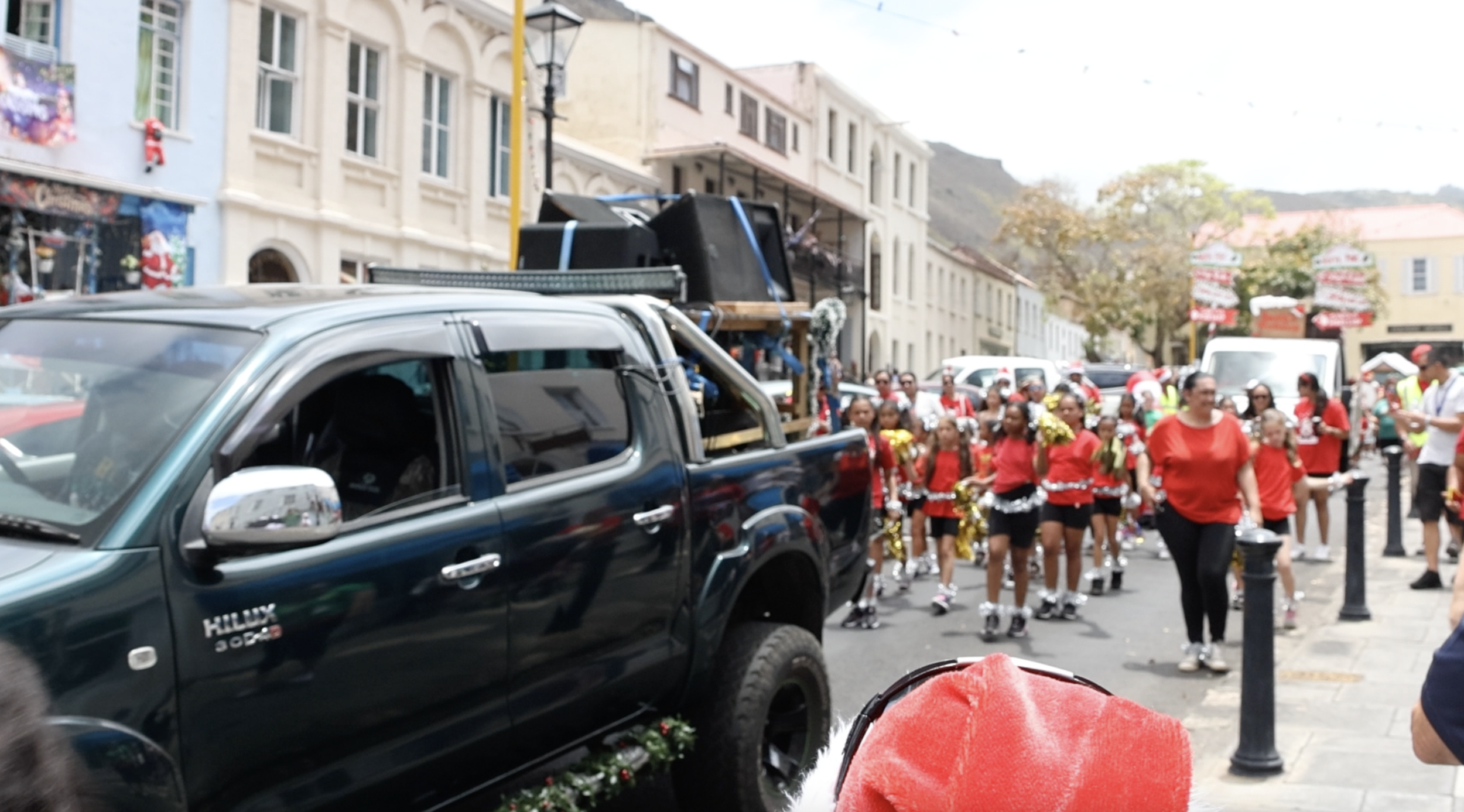
Christmas Parade 2024
Using new tools to speak to the community.
The way Zac learned to make music was perhaps more individualized than the ways of the past. He recalls learning a lot whilst receiving medical treatment in hospital in Cape Town, and he says he and his like-minded friends didn’t really get together to discuss their progress until after the beginning stages. However, a sense of togetherness still underpins his artistic outlook. He mentions that he would like to perform live, perhaps even organizing a music festival, and that when he performs live he feels very much propped up by his community. Despite his music being digitally-generated, Mark still wants to connect to his audience, and themes of community development and wellbeing are central to his artistic intentions.
Mark says that he hopes that his music will be able to uplift and inspire Saints to believe in themselves. This reveals that whilst the tools of music making might have become individualised, the intent and the final product remains social.
You have reached the end of Part 3: Singing Together